- Brochure WebsitesProfessional 5-10 page sites
- Web Design PackagesMonthly plans from £69
- Responsive DesignFluid layouts for every device
- E-Commerce DesignStorefronts built to convert
- Product PagesCatalogue & product listings
- Mobile DesignMobile-first experiences
- Landing PagesHigh-converting campaign pages
- Website Redesign
- Case StudiesReal client projects
- Retail & E-CommerceOnline stores & shop websites
- Professional ServicesLaw, finance & consulting
- Hospitality & LeisureHotels, leisure & food service
- Property & LettingsEstate agents & lettings portals
- Trade & ConstructionBuilders, plumbers & electricians
- Industrial & ManufacturingEngineering, logistics & manufacturing
- Web ApplicationsCustom business tools & portals
- E-Commerce DevMagento, Shopify & bespoke
- CMS DevelopmentCustom content management
- Database SystemsBespoke data solutions
- Mobile AppsiOS, Android & hybrid
- Sage 50 IntegrationAutomate your accounts
- SaaS PlatformsMulti-tenant applications
- API DevelopmentRESTful & GraphQL APIs
- Next.js & ReactModern frontend frameworks
- WordPressBuild, fix, host & look after
- Search Engine MarketingRank higher on Google
- Content WritingSEO-optimised copy
- ConsultingStrategic digital advice
- Logo DesignBrand identity creation
- Web HostingDedicated UK servers
- Email HostingProfessional mailboxes
- MaintenanceOngoing support & updates
- Security & SSLKeep your site safe
- Domain RegistrationFind your perfect domain
- Blog & InsightsTips, guides & news
- Free SEO AuditCheck your site health
- AI ChatbotsGPT-powered conversational AI
- AI Voice AgentsAnswer calls 24/7 automatically
- AI AutomationEliminate repetitive workflows
- Custom AI DevelopmentTrained on your business data
- AI IntegrationConnect AI to your existing stack
- AI ConsultingStrategy & honest AI advice
- GPT-4 & ClaudeLatest large language models
- ElevenLabs VoiceNatural-sounding voice AI
- RAG SystemsAI that searches your knowledge base
- CRM IntegrationHubSpot, Salesforce & Pipedrive
- Document IntelligenceExtract data from any document
- Private AI DeploymentYour data never leaves your servers
Case Study
Recruitment Agency Website Design — LogiStaff Case Study
A logistics and HGV recruitment agency covering the South West — where every vacancy is its own page that can rank on its own, and a driver can register with their CV from a phone.

Two audiences who want opposite things
LogiStaff supply drivers and logistics staff to businesses across the South West of the UK. In their own words they are “a trusted logistics recruitment partner… taking full responsibility for sourcing, managing, and supplying reliable logistics staff.”
A recruitment website has to serve two people who want opposite things from the same page. A transport manager who is a driver short on Monday morning wants to know somebody will answer. A Class 1 driver looking for better work wants to see the jobs, and wants to apply without finding a desktop.
Build for one and you lose the other. The site is laid out so each has a route in from the first screen: seven ways to cover a shortage on one side, the live vacancies on the other.
Every vacancy is its own page, and that is the point
The easy way to build a jobs section is one page with a list on it. It is also the way to be invisible: a single page cannot rank for “HGV Class 1 driver Bridgwater” and “3.5t van driver Exeter” at the same time, because it is not about either of them.
Here every vacancy is a real page with its own address, its own title and its own description — Class 1 in Bridgwater, tanker work out of Shaftesbury, van delivery in Bodmin, Yeovil, Exeter and St Austell. Somebody searching for the job they actually want lands on the job itself rather than on a list they have to read through.
They are not static pages typed up by hand, either. The vacancy list and the vacancy pages are live components reading from the agency’s own data, so a job that is filled comes down and a new one goes up without anybody rebuilding a page.
Registering with a CV, from a phone
Most drivers are not sitting at a desk when they decide to look for something better. They are on a phone, often in a cab, and if registering means finding a laptop it will not happen.
So the site opens with register and upload your CV, and the form takes the file from the phone it is being filled in on.
The CV arrives attached to the email itself. It is never sent as a link to a file store — a rule we hold across every site we run, because a bare link to somebody’s CV is a document anyone who gets forwarded that email can open, for as long as it exists.
Seven ways to cover a shortage, said plainly
The services are written the way a transport manager actually has the problem rather than the way an agency likes to describe it: day to day temp cover, holiday cover, sickness cover, workload management.
Alongside them sit the things that make a driver stay on the books — CPC, ADR and HIAB training, driver theory assessment, and support and advice — each on its own page rather than buried in a paragraph on a services list.
Free licence upgrades and ongoing training are given their own space on the home page, because for a driver choosing between agencies that is frequently the deciding factor and it is the sort of thing that usually ends up in small print.
Built to keep working without us
The site runs as a hybrid: the written pages are ours, and the vacancies, the applications and the blog are live components fed from the agency’s own data.
That distinction is what stops a recruitment website going stale. The parts that change weekly — which jobs are open, who has applied, what has been posted — change without a developer, while the parts that should not drift stay exactly as they were built.
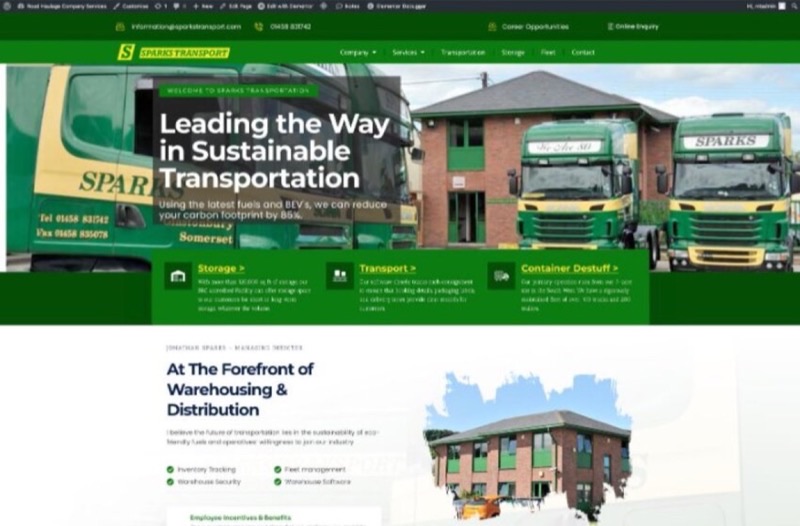
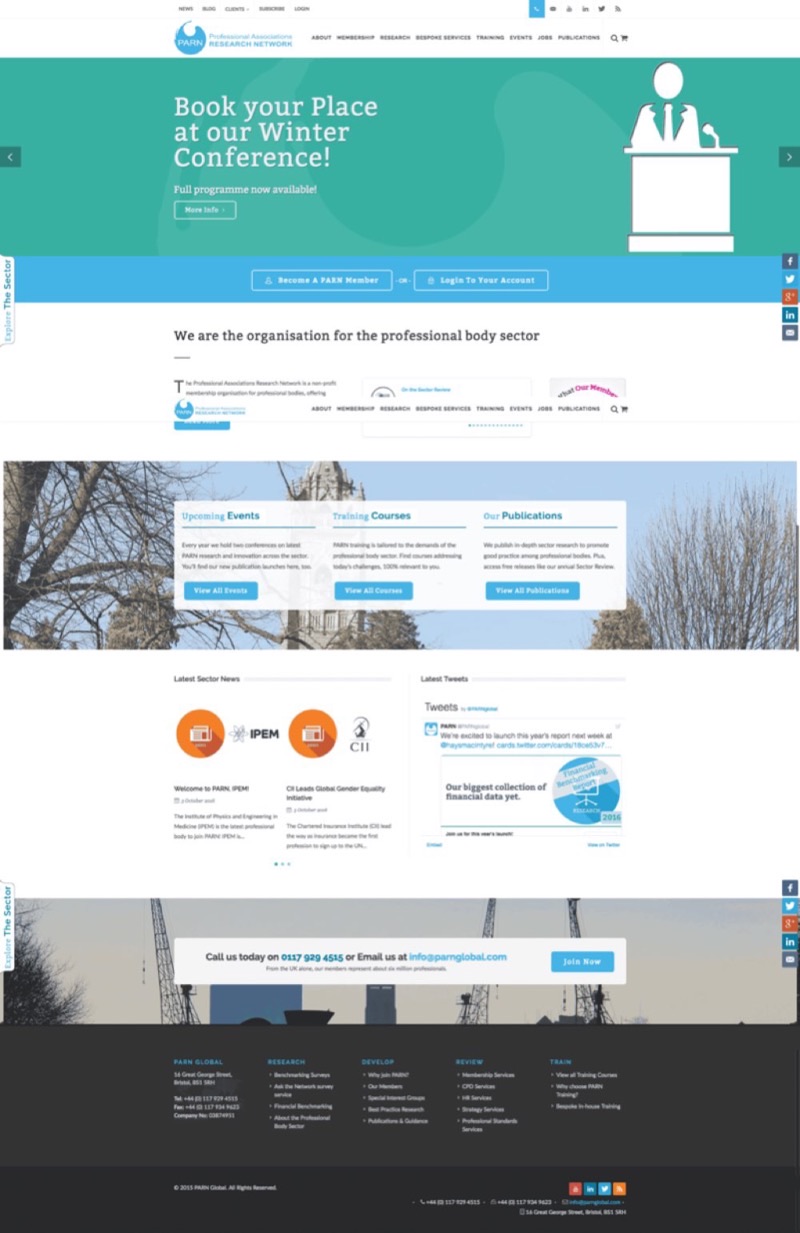
LogiStaff is live on logistaff.co.uk. If you run an agency and your vacancies are invisible because they all live on one page, that is exactly the work. The Sparks Transport case study and the PARN Global case study are comparable projects.
What We Built
Project development work carried out
A Page For Every Vacancy
Each job has its own address, title and description, so drivers find the job rather than a list.
Live Vacancy Components
Jobs are fed from the agency’s own data — filled roles come down and new ones go up without a rebuild.
CV Capture From A Phone
Register and upload from the device in your hand, with the CV attached to the email rather than linked.
Seven Services, Each Its Own Page
Temp, holiday and sickness cover, workload management, CPC / ADR / HIAB training, assessment and advice.
Common Questions
Recruitment Agency Website Design FAQs
More case studies
View all work →





Need a website for your recruitment agency?
Tell me what you need and I will give you a fixed price. You deal with the person who builds it — not an account manager, not an offshore team.