- Brochure WebsitesProfessional 5-10 page sites
- Web Design PackagesMonthly plans from £69
- Responsive DesignFluid layouts for every device
- E-Commerce DesignStorefronts built to convert
- Product PagesCatalogue & product listings
- Mobile DesignMobile-first experiences
- Landing PagesHigh-converting campaign pages
- Website Redesign
- Case StudiesReal client projects
- Retail & E-CommerceOnline stores & shop websites
- Professional ServicesLaw, finance & consulting
- Hospitality & LeisureHotels, leisure & food service
- Property & LettingsEstate agents & lettings portals
- Trade & ConstructionBuilders, plumbers & electricians
- Industrial & ManufacturingEngineering, logistics & manufacturing
- Web ApplicationsCustom business tools & portals
- E-Commerce DevMagento, Shopify & bespoke
- CMS DevelopmentCustom content management
- Database SystemsBespoke data solutions
- Mobile AppsiOS, Android & hybrid
- Sage 50 IntegrationAutomate your accounts
- SaaS PlatformsMulti-tenant applications
- API DevelopmentRESTful & GraphQL APIs
- Next.js & ReactModern frontend frameworks
- WordPressBuild, fix, host & look after
- Search Engine MarketingRank higher on Google
- Content WritingSEO-optimised copy
- ConsultingStrategic digital advice
- Logo DesignBrand identity creation
- Web HostingDedicated UK servers
- Email HostingProfessional mailboxes
- MaintenanceOngoing support & updates
- Security & SSLKeep your site safe
- Domain RegistrationFind your perfect domain
- Blog & InsightsTips, guides & news
- Free SEO AuditCheck your site health
- AI ChatbotsGPT-powered conversational AI
- AI Voice AgentsAnswer calls 24/7 automatically
- AI AutomationEliminate repetitive workflows
- Custom AI DevelopmentTrained on your business data
- AI IntegrationConnect AI to your existing stack
- AI ConsultingStrategy & honest AI advice
- GPT-4 & ClaudeLatest large language models
- ElevenLabs VoiceNatural-sounding voice AI
- RAG SystemsAI that searches your knowledge base
- CRM IntegrationHubSpot, Salesforce & Pipedrive
- Document IntelligenceExtract data from any document
- Private AI DeploymentYour data never leaves your servers
Sector
Haulage & Transport Web Design
Websites for hauliers, distribution firms, warehousing operators and logistics businesses across the UK. Built to win contracts and fill driver vacancies.
- HGV Class 1 DriverNights
- Warehouse OperativeDays
- Collected
- In transit
- Delivered
Three audiences, one website
A haulage website is doing three jobs at once, and most of them only do the first badly.
Shippers and logistics managers want to know what you carry, where you cover and whether you are accredited. They are deciding whether to put you on a list, and they want the answer in under a minute.
Drivers want to know whether you are hiring and what the work looks like. For most operators the vacancies section is the highest-traffic part of the site by a considerable margin, which almost nobody plans for.
Existing customers want a phone number, a tracking reference or a proof of delivery without navigating a menu. Every minute they spend hunting is a call to your office that did not need to happen.
- ShippersWhat you carry, where, and your accreditations
- DriversWhether you are hiring, and what the work is
- CustomersA phone number, tracking, proof of delivery
Stand out
Why most haulage sites look identical
Nine out of ten look the same
Open ten UK haulage websites and nine are the same: a stock photograph of a motorway at dusk, a paragraph about reliability, five services in a list, a contact form. Nothing distinguishes one operator from the next.
Your own fleet, not stock
Haulage is a visual business. The fleets are smart, the liveries distinctive, the depots genuinely impressive. Using your own photography at scale separates you from every competitor relying on stock imagery, and it costs nothing but the time to take the pictures.
Structure that ranks
The second differentiator is structure. Warehousing, container destuffing, storage, pallet distribution and general haulage are searched separately, usually with a location or load type attached. Split across pages, each can rank.
Built for a mobile, low-signal audience
Almost everyone reaching a haulage website is on a phone — a driver in a lay-by, a transport manager between meetings, a customer chasing a delivery from a yard with one bar of signal.
That shapes everything. Pages light and fast rather than image-heavy. The phone number one tap away. Forms usable one-handed. We build mobile-first and test on real devices, because a resized browser window tells you very little about a five-year-old Android on a motorway.
Where operators need more than a website we build web applications — customer portals, booking systems, tracking interfaces — and integrate with the systems already running the business, including Sage 50.
- One tap to callthe number always in reach
- Light, fast pagesfor one bar of signal
- One-handed formsusable from a cab
- Trackingand proof of delivery
- Booking systemsand customer portals
- Sage 50nobody rekeys data
Proof
Clients we have built for
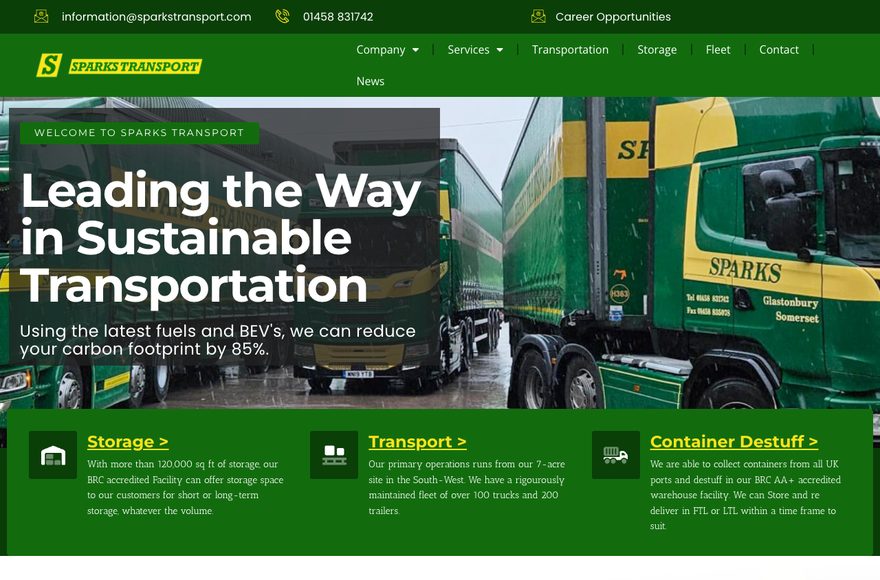
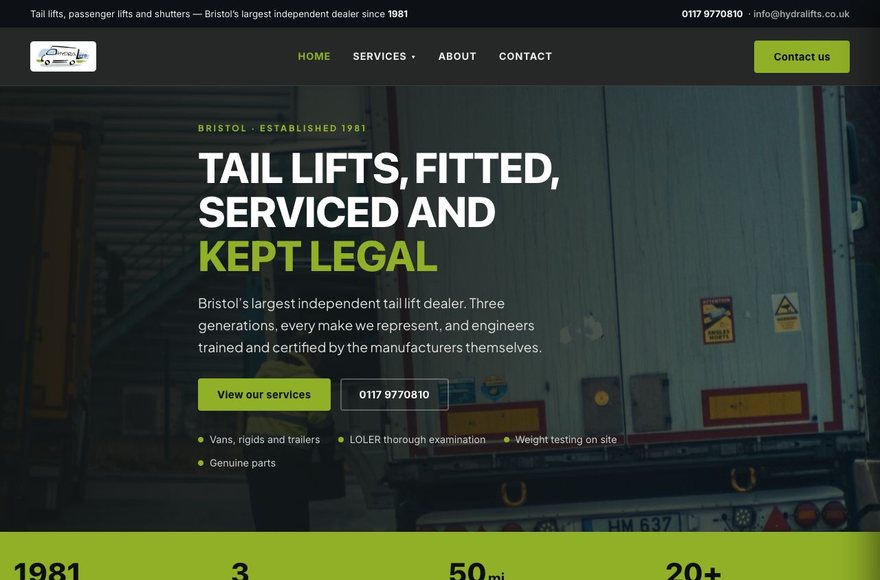
Named clients and real projects — several of them relationships running well over a decade.
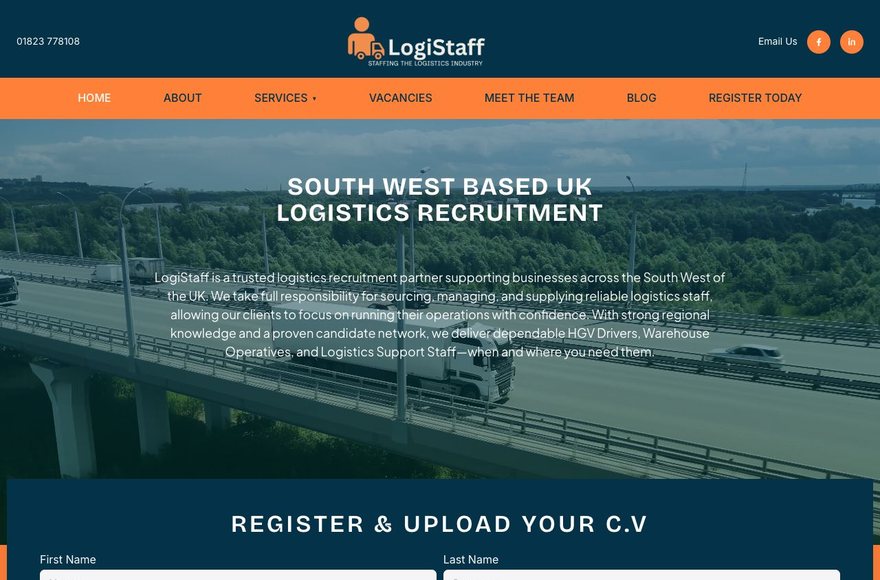
Live at logistaff.co.uk
What We Build
What this sector needs
Service Pages That Rank
Warehousing, distribution, storage and container work each given their own page, because that is how people search.
Driver Recruitment
A proper vacancies section with individual role pages and structured data, so jobs appear in Google Jobs rather than sitting in a PDF.
Fast on Poor Signal
Built light and mobile-first, because the audience is in cabs and yards rather than at a desk on fibre.
What's next
AI that answers while the fleet’s on the road
Shippers asking about capacity, drivers asking about work, customers chasing a delivery. AI can take a share of those calls and emails, so the office can run the operation.
“Where’s my delivery?” calls answered
A voice agent that answers in your brand's voice, takes the details and handles the query, or passes it to your team. Out of hours too.
AI voice agents →Website“Are you hiring drivers?” answered
A chat assistant that answers your customers' questions on the website and hands over to your team at the right moment.
AI chatbots →PaperworkDelivery notes and invoices filed
AI that reads the invoices, forms and emails that come in, pulls out the details and files them in the right system automatically.
AI automation →Follow-upEvery quote request followed up
Enquiries captured, sorted and passed to your team, with reminders and follow-ups sent without anyone chasing them.
AI automation →It's the same AI we're building our own business on, from our back-end systems to our sales tools. See everything we do with AI →
Prices
What it costs and how it works
Websites start from £69 a month for a focused site and £119 a month for a larger build with a content management system and individual service pages. Complex projects with e-commerce, bespoke tools or integrations are quoted. Full detail is on the pricing page.
Every price is fixed and agreed in writing before work starts. Anything outside your plan is quoted first: no scope creep, no invoice at the end larger than the quote. Hosting and support run from £45 a month on UK servers, on our Care plan, with every support request answered the same working day.
Mediatopia is deliberately small. You deal with the person who designs the site, builds it, hosts it and answers the phone when something needs changing — not an account manager or a junior learning on your project. It is why several clients have been with us for more than fifteen years. See the full case studies.
Common Questions
Haulage & Transport Web Design FAQs
How much does a haulage company website cost?
A focused site covering your services, fleet and coverage starts from £69 a month. A larger build with individual service pages and a vacancies section is £119 a month. Sites needing tracking integration or customer portals are quoted.
What should a transport company website include?
Individual pages for each service. Your coverage area stated plainly. Accreditations and licences — O-licence, FORS, CPC, ADR where relevant. Fleet detail if it is a selling point. And a vacancies section, which for most operators becomes the most visited part of the site.
Will a website actually bring in haulage work?
It brings in the enquiries you would otherwise never hear about. Most contract work still comes through relationships, but a logistics manager sourcing capacity will look you up before they call — and what they find decides whether the call happens.
How do I attract drivers through the website?
A proper vacancies section rather than a PDF. Individual pages per role with structured data so they appear in Google Jobs, and a short application form rather than an email address.
Can you integrate a transport management system?
If your TMS exposes an API, yes. Tracking, proof of delivery and booking can surface on the website rather than sending customers to a separate portal.
Do you work with hauliers across the UK?
Yes. Everything is handled remotely as standard and location makes no practical difference.
Get started
Need a website that reflects the operation?
Tell me what the business does and what the website needs to achieve, and I will give you a fixed price. You deal with the person who builds it.